 New games added weekly —

Moto Hill Climbing
Less Throttle, More Control
The bike is not trying to throw you off. It is following simple physics, and once you understand what tips it over, the steep hills stop being so scary.
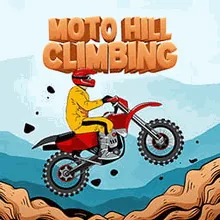
Hill-climbing games are built on one of the most satisfying ideas in browser gaming: a vehicle, a bumpy landscape and physics that make every slope feel real. Moto Hill Climbing puts you on a motorbike and asks you to get as far as you can over terrain that seems designed to flip you over.
Almost every crash comes down to the same few causes. Here they are, with what to do instead.
Why the Bike Flips Backward
When you accelerate, the rear wheel pushes the bike forward, and some of that force tries to lift the front. On flat ground it is barely noticeable. On a steep climb, the slope adds to the effect, and holding full throttle can lift the front wheel until the bike tips over backward.
The fix is not to stop accelerating, but to ease off when the front starts to rise and squeeze the throttle again when it settles. Climbs are a rhythm of small throttle adjustments, not one long press.
Why It Nosedives on Descents
Going downhill, gravity pulls the front of the bike down. Leaning or braking too hard at the top of a slope can tip the nose into the ground. Easing over the crest gently, then letting the bike settle before speeding up, keeps both wheels where they belong.
Bumps and Landings
Rough ground throws the bike into the air, and landings are where many runs end. The goal is to land on both wheels, or on the rear wheel first. Small corrections in the air to level the bike before touching down make landings far smoother than hoping for the best.
Speed Is Not Always Your Friend
It is tempting to approach every hill flat out. Sometimes that works, launching you over the top. Often it sends the bike flying off the crest at a bad angle. Learning which hills want momentum and which want a slower, controlled climb is most of the skill, and every section you ride a few times teaches you which is which.
Reading the Terrain Ahead
Good riders look a few seconds ahead, not at the wheels. A long climb after a dip needs speed carried out of the dip; a sharp crest needs you to slow before reaching it. Spotting those shapes early gives you time to set your speed instead of reacting at the last moment, which is when most wobbles turn into crashes.
Controls and Practice
On a keyboard, the arrow keys control throttle and balance; on touch devices, on-screen buttons do the same job. A good way to practice is to replay the first stretch of terrain until you can ride it without a single wobble. The control you build there carries straight over to the harder sections later.
Where to Go Next
If this one clicked for you, these are worth a try:
The full racing list has plenty more.
Common Questions
Too much throttle on a steep climb. Ease off when the front wheel lifts and accelerate again when it settles.
Level the bike in the air and aim to land on both wheels or the rear wheel first.
No. Some hills need momentum, others need a slower, controlled climb.